
34,818 Clean cookstoves distributed
Clean cookstoves distributed
20,818 Utkal Uday and 14,000 Koshal, as published.
Meensou India · Sustainability
Rooted in communities. Driven by climate action.
Mangrove restoration on the Sundarbans coast, and cleaner kitchens across rural Odisha. The figures here are the ones Meensou has published.
1.2M+Saplings planted
34,818Cookstoves distributed
2021Founded
Commitment
01
Meensou India Private Limited works in the Sundarbans and in rural Odisha. Carbon work runs through mangrove restoration, and through the replacement of smoky wood fires with the Prathamesh-1 improved cookstove.
02
No issued credit total is published, so none is shown. Training, nurseries and follow-up are how the work is meant to last.
Published figures
34,818 Clean cookstoves distributed
Clean cookstoves distributed
20,818 Utkal Uday and 14,000 Koshal, as published.
45,000+ Households benefited
Households benefited
Families reached, from the company projects overview.
1.2M+ Mangrove saplings planted
Mangrove saplings planted
Reported planting. Three million is the stated ambition.
2,000+ Communities engaged
Communities engaged
Villages reached across the published portfolio.
—Not published
Verified emission reductions. No issued tonne total is published. This space stays empty until one is.
Planting: the Project Sundari page says more than 1.2 million mangrove saplings have been planted, toward a 3 million-plus ambition. The shorter projects overview labels the same work “3M+ saplings planted”. This site uses 1.2 million+ as the reported figure.
Area: the same project page says restoration activities have covered 438 hectares, against a long-term target of 4,500 hectares. A heading on that page reads “1,000 hectares restored”, which does not match the explanation beneath it. This site uses 438 hectares.
Standard: the project page says Sundari is being developed under the Verified Carbon Standard, methodology VM0033, on a 20-year horizon. The homepage also shows a Gold Standard badge. Those statements conflict, so the badge is not repeated here.
Households: the projects overview says 45,000+ families. A separate homepage strip says 10K+ families. This site uses 45,000+.
Cookstoves: utkaluday.net reports 20,818 Prathamesh-1 stoves. The projects overview rounds Utkal Uday to 20,000. Firewood savings are described as 55–60% on the project site and up to 50% on the projects overview.
The homepage impact counters currently display zero. They are treated as a presentation error, not as results.
Environmental, social, and the record that holds them together.
01
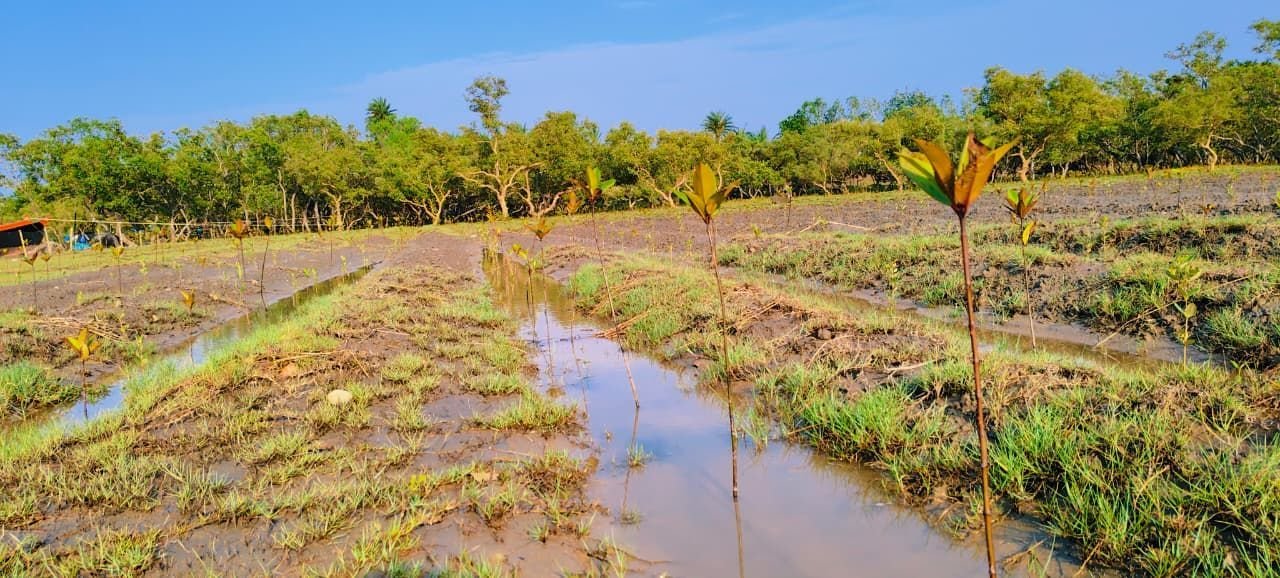
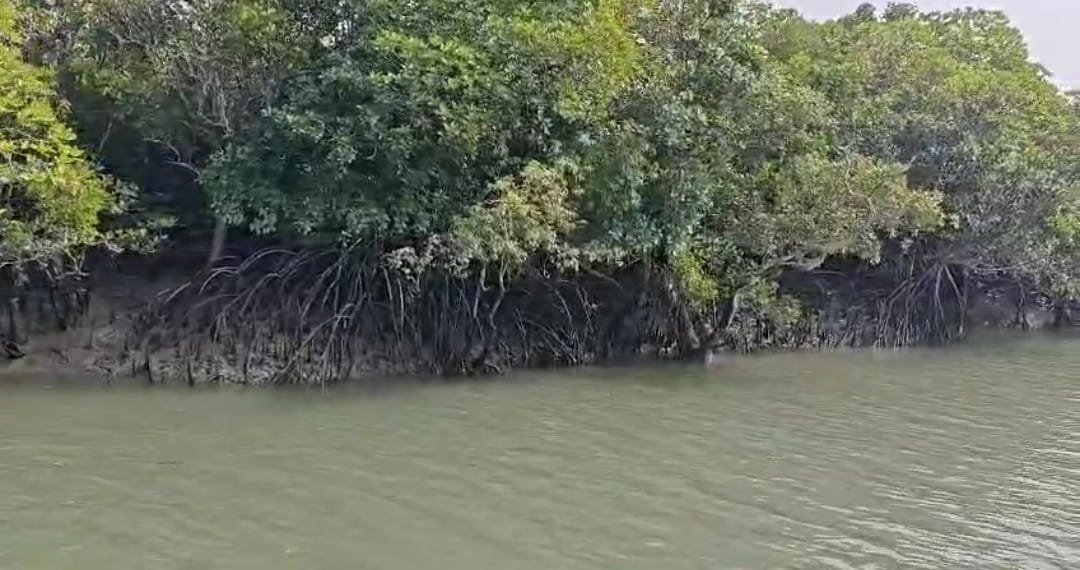
Native mangrove restoration in the Indian Sundarbans, nursery stock for replanting, and a cookstove programme that lowers the wood a household burns.
Open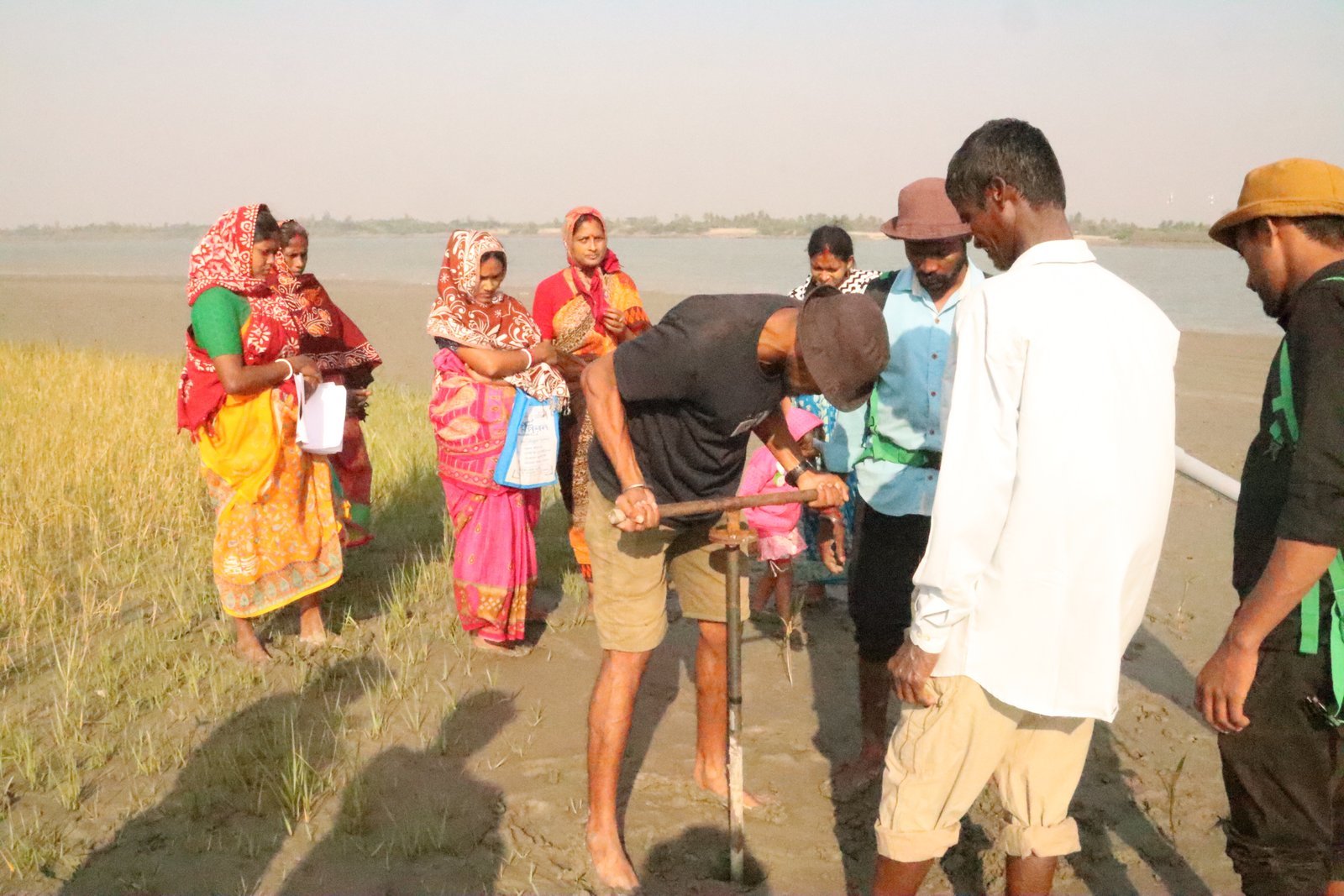
02
Rural and tribal households, cleaner kitchens, training on the tidal flat, and consultations held in the villages the projects affect.
Open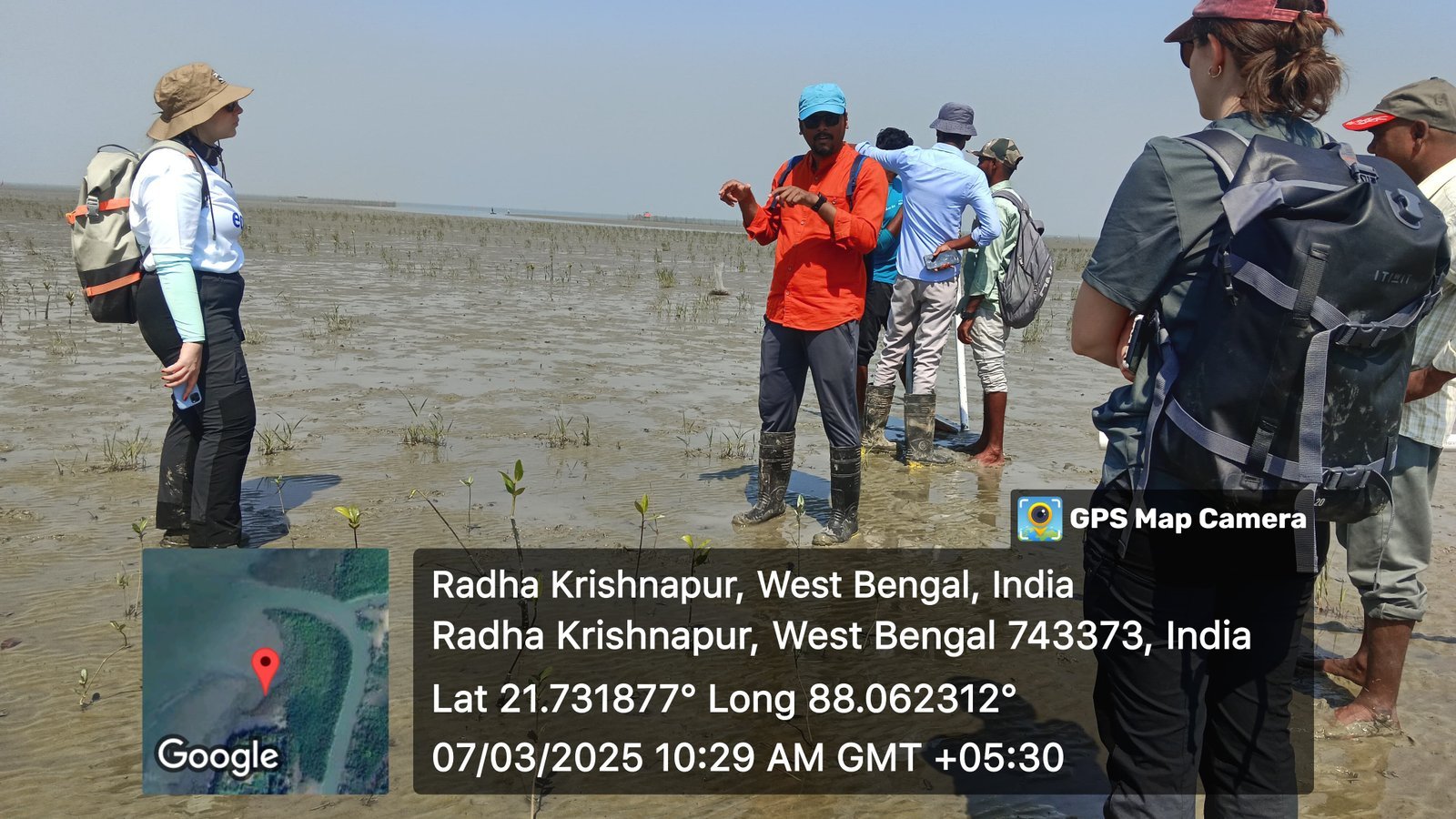
03
Satellite checks, field forms, GPS and return visits. Figures on this page stay labeled as reported, targeted, or not yet published.
OpenProjects
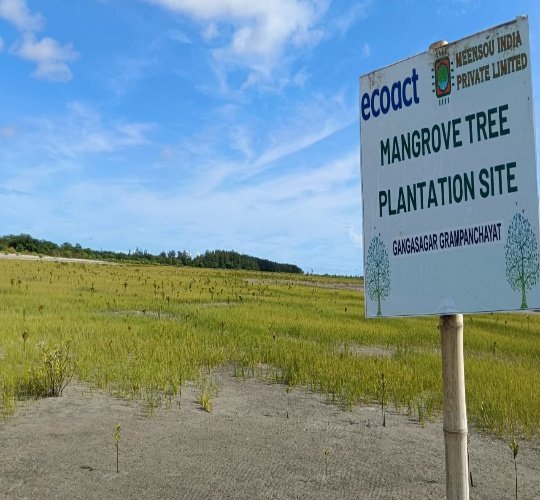
01South 24 Parganas, Indian Sundarbans
Mangrove restoration and coastal resilience
Active on the projects page since 2022
Project Sundari restores degraded mangrove ecosystems in the Indian Sundarbans. The public project page sets a long-term restoration area of 4,500 hectares and names 19 native species, particularly Avicennia, Rhizophora and Bruguiera. Restoration activity is described as already covering 438 hectares, with more than 1.2 million saplings planted toward a 3 million-plus ambition. A network of 11 nurseries supports planting and replanting. The carbon framework on that page is the Verified Carbon Standard, methodology VM0033, over a 20-year horizon. It is described as being developed, and this site does not present the project as issued or credit-ready.
Being developed under VCS methodology VM0033
Find the site
Satellite imagery, land-use analysis, NDVI and GIS narrow the search. Kobo forms then check the ground.
Agree it locally
Gram panchayats and local stakeholder consultations shape where restoration is welcome. Participation is formalised through letters of engagement.
Raise and plant
Nurseries prepare native stock. Planting follows site conditions, not a single species mix for every mudflat.
Watch and replant
Field inspections, GPS, water and soil checks, and a central dashboard track survival. Failed patches are replanted from the nursery reserve.
Ten locations are named within a network reported as 11 nurseries.
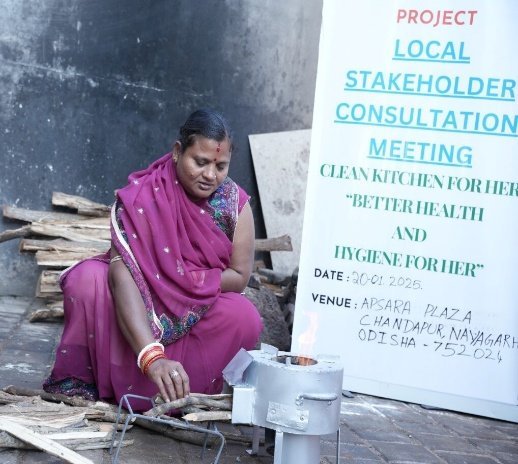
02Ten districts of Odisha
Improved household cookstoves
Presented as an active cookstove programme
Utkal Uday is Meensou India’s improved cookstove initiative in Odisha, described on utkaluday.net as a collaboration with myclimate. The project site reports 20,818 Prathamesh-1 stoves across 10 districts and more than 100,000 lives reached. The stove is described there as exceeding 33% thermal efficiency, with up to 90% smoke reduction and 55–60% less firewood. Meensou’s projects overview rounds distribution to 20,000 stoves and describes firewood savings as up to 50%. Those performance figures are stated product and programme claims, not third-party verified emission totals.
Distribution reported by the project site
Local outreach
Teams work with local leaders so households understand what changes in the kitchen and why.
Distribution hubs
Stoves move through hubs rather than as a one-day drop, so storage and handover stay organised.
Use and care
Educational sessions cover lighting, fuel use and maintenance of the Prathamesh-1.
Follow-up
The project site describes surveys, feedback and contact with local authorities after distribution.
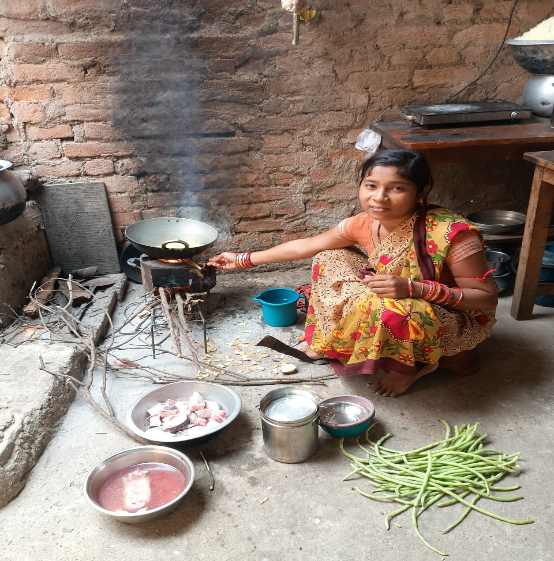
03Balangir and Kalahandi, Odisha
Clean cooking and tribal livelihoods
Active on the projects page since 2023
The Koshal Project, as described on meensou.com/projects, works with indigenous tribal communities in Balangir and Kalahandi. The page reports 14,000 stoves, 14,000+ tribal families, 26 blocks and 470+ villages. It emphasises awareness in local languages, forest stewardship and a shift toward more sustainable forest-product collection. A public search snippet of koshal.info describes the project as a collaboration with EcoAct; that site could not be fully read during this build, so the collaboration is noted rather than documented with a logo.
Cookstove distribution reported
Language and trust
Awareness is described as running in native tribal languages, with community and forest institutions in the conversation.
A stove in the household
Improved cookstoves are the household intervention, alongside the wider livelihood work.
Forest stewardship
The project includes local forest protection and training for community stewardship.
Where the work is
Sundari works across eleven blocks of South 24 Parganas. Utkal Uday names ten Odisha districts. Koshal names Balangir and Kalahandi. Offices sit in Kuchinda, Kolkata and Bengaluru.
Monitoring
These are the methods Meensou describes in its project documentation. The charts use those published figures. They are not a live operations dashboard.
01
Kobo forms capture pre-restoration assessments, social baselines and monitoring plots. Cookstove work uses field apps for surveys and stove records.
02
Sundari uses satellite imagery, land-use analysis, NDVI and GPS. A March 2025 field photograph carries its own coordinate.
03
Water and soil checks cover pH, salinity, temperature, turbidity, dissolved oxygen and conductivity, alongside height and girth tools.
04
The project page describes a central dashboard for plantation metrics, survival and analytical reports. It is not connected as a live feed on this website.
Published figure
438 hectares described as covered, against a 4,500 hectare target. That is about 9.7% of the stated long-term area.
Source: Project Sundari page
Published totals
Utkal figure from utkaluday.net · Koshal figure from meensou.com/projects
Communities
These are field records Meensou has published. Quotations are not written for people who did not give them.
Sundarbans · 2024
Planting, taught on the flat
The 2024 mangrove training programme puts nursery and planting technique in the hands of people who live on the same shore. The project page says women account for 80% of plantation participation.
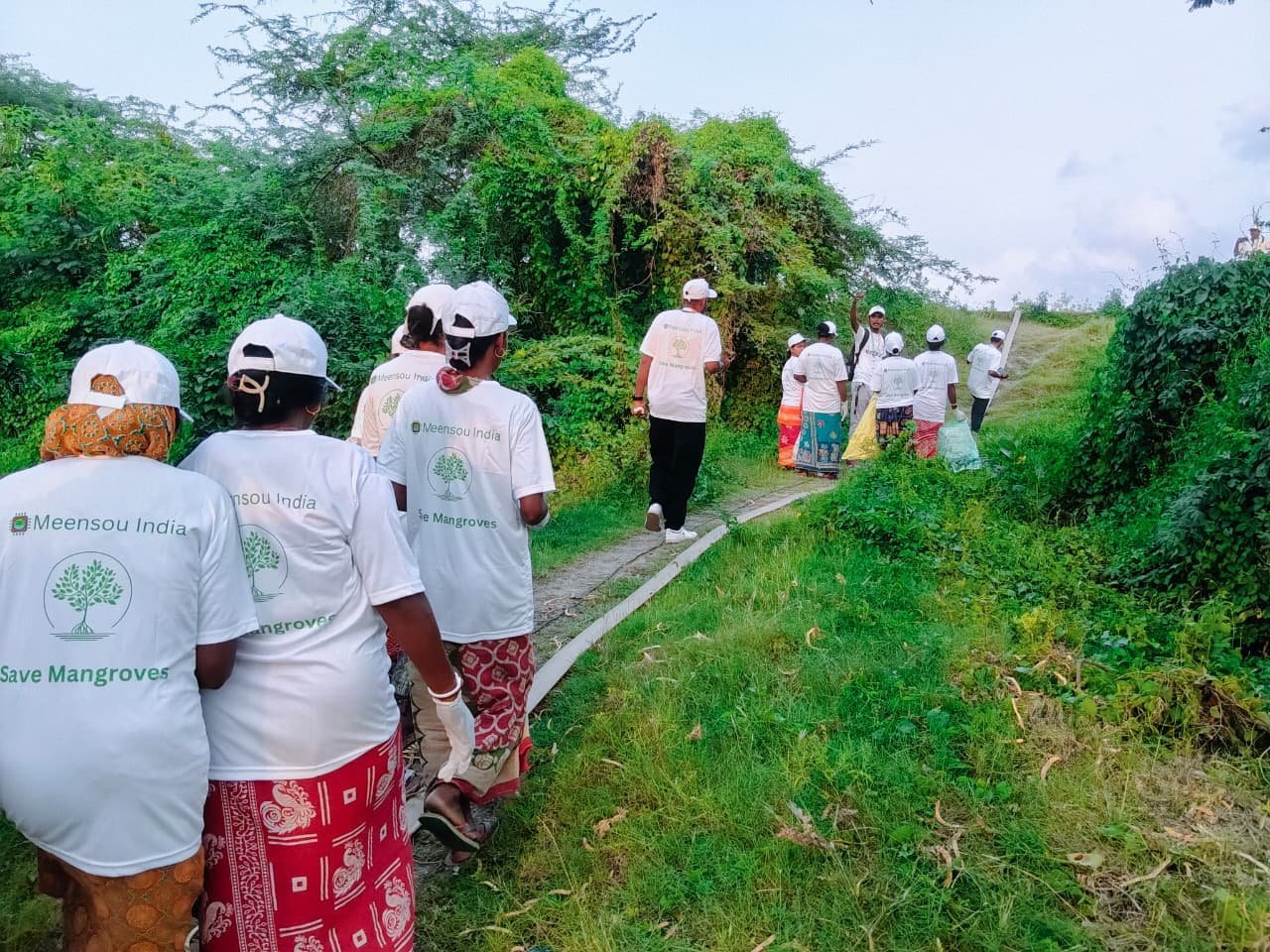
Sundarbans · 2026
A cleanliness walk beside the mangroves
Community cleanliness drives are part of the published Sundari field record, alongside plantation and monitoring rather than instead of them.
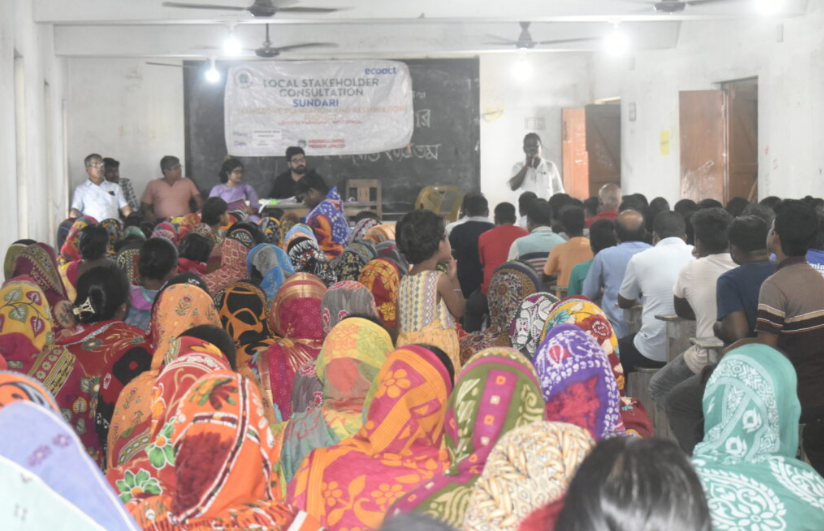
Sundarbans · 2025
A full room in the Sundarbans
Local stakeholder consultations are held in the blocks, not only in Kolkata. The 2025 gallery shows residents meeting under a banner that names both Sundari and EcoAct.
Chandapur, Nayagarh · 2025
Clean kitchen, Nayagarh
On 20 January 2025, Utkal Uday held a local stakeholder consultation at Apsara Plaza, Chandapur, under the line “Clean kitchen for her. Better health and hygiene for her.”
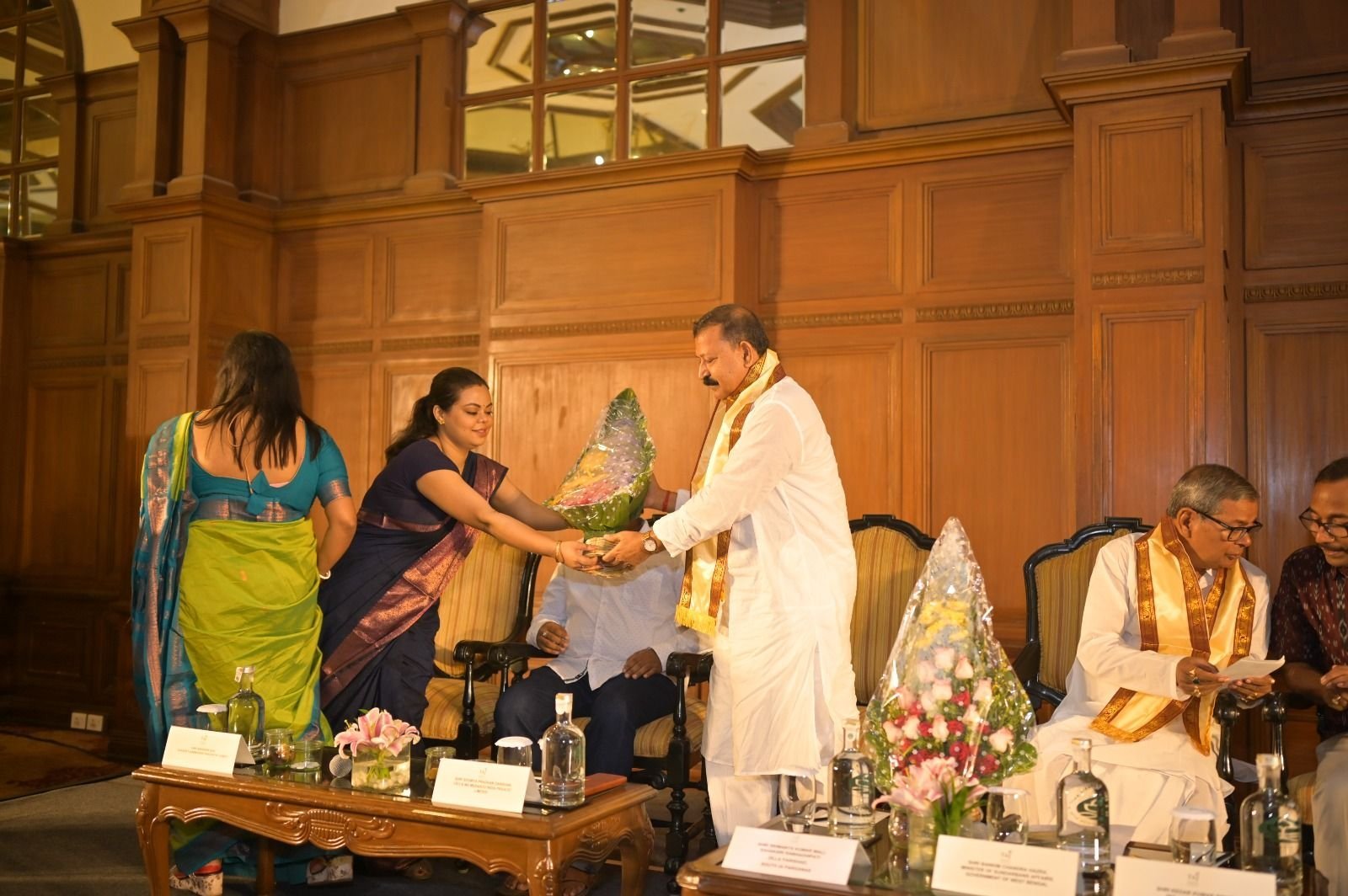
Kolkata · 2025
Mangrove workshop, Kolkata
The project gallery records a Mangrove Workshop in 2025. Meensou’s public account of 25 June 2025 describes a Sundari workshop at Taj Bengal with the Minister of Sundarbans Affairs, EcoAct specialists and local representatives.
Kutrachuan, Sambalpur · Published on utkaluday.net
The Utkal Uday site describes a health camp in Kutrachuan Panchayat, Kuchinda block, led by Dr. Sudhamaya Nayak. More than 40 people received check-ups, and medicines were provided at no cost.
utkaluday.net
Goals
The goals below are the ones Meensou’s published activities speak to. Listing them is not a United Nations endorsement, a certification, or a formal affiliation.
Sundari links restoration work with local employment, nursery roles and a participatory benefit-sharing mechanism.
Project Sundari
Utkal Uday describes cleaner kitchens and less indoor smoke, and records a health camp in Kuchinda block.
Utkal Uday
The Sundari page reports that 80% of plantation participation is by women. Cookstove work is framed around women’s time and kitchen conditions.
Sundari, Utkal Uday, Koshal
Prathamesh-1 improved cookstoves are distributed to rural households in place of less efficient wood-fired cooking.
Utkal Uday, Koshal
The company homepage reports 50+ rural jobs created or sustained through the restoration work.
Project Sundari
Restoration and clean cooking are the two routes Meensou uses to cut pressure on forests and build coastal resilience.
All projects
Mangroves are described as nursery grounds for fish, crabs and shrimp that local livelihoods depend on.
Project Sundari
Nineteen native mangrove species are named in the restoration plan, with nurseries holding stock for replanting.
Project Sundari
Delivery runs with panchayats, field teams and named collaborators including EcoAct and myclimate.
All projects
A consolidated sustainability report PDF has not been published. The links below are the public project records that exist today.
Partnerships, project questions and requests for the published figures come to the same address.
Connect With MeensouContact
Odisha
Field operations
Kundaposhi, Kuchinda, Odisha 768222
West Bengal
Kolkata office
Ergo Tower, Sector V, Bidhannagar, Kolkata 700091
Karnataka
Bengaluru workspace
Hubstairs CoWorks, BTM Layout, Bengaluru 560068